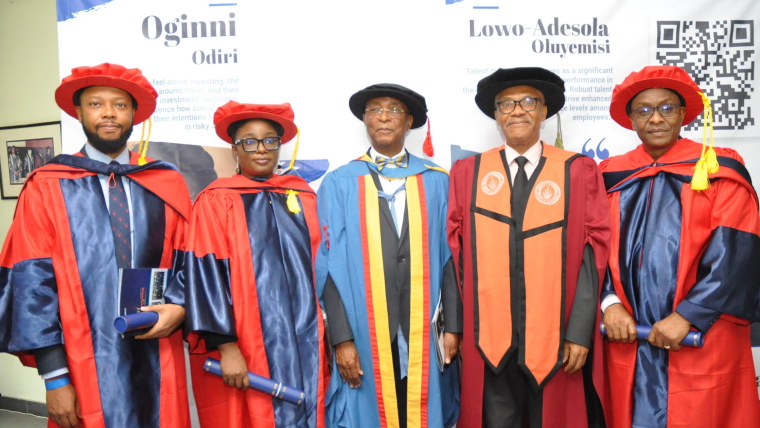
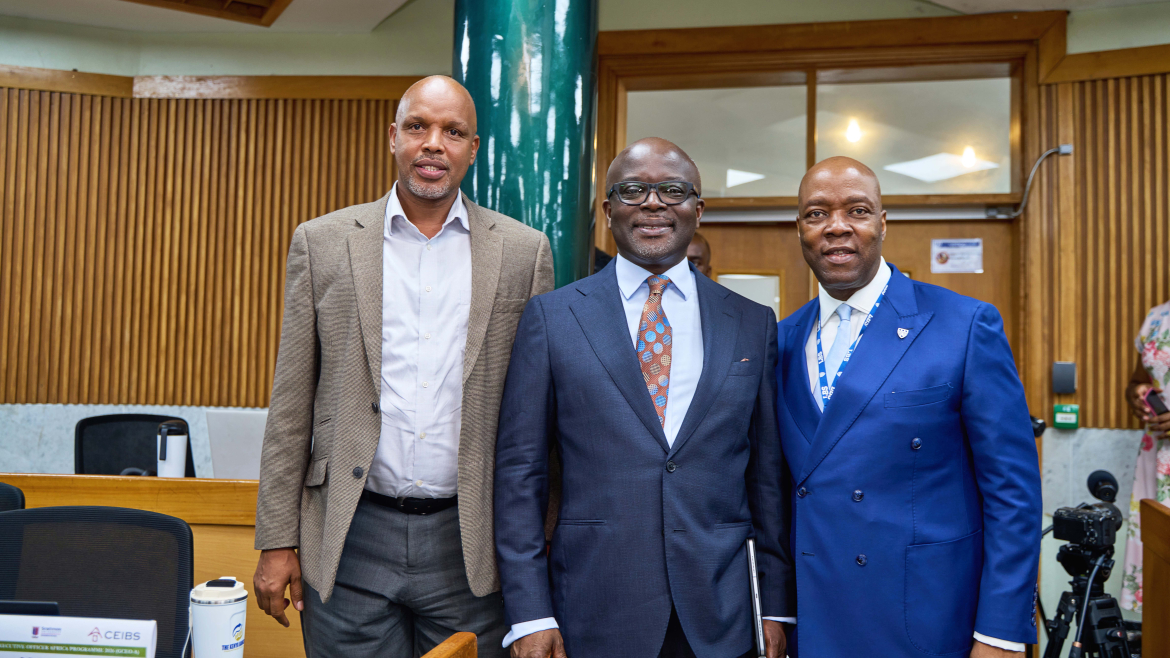
From July 13 to 17, 2026, Lagos Business School, Pan-Atlantic University (LBS), hosted the second module of the annual Global Chief Executive Officer-Africa (GCEO-A) Programme. This pan-African executive initiative is jointly delivered by Lagos Business School (Nigeria), Strathmore Business School (Kenya), and China Europe International Business School (CEIBS) in Shanghai, China. The three-part programme builds the strategic perspective and leadership capacity senior executives need to manage complex operations across African and global markets.
The 2026 cohort brings together board members, C-suite executives, founders, and managing directors from seven African countries. Representing diverse sectors, many of these leaders bring more than 20 years of experience managing large-scale, high-value enterprises. Structured around the theme, “Africa’s Economy: Sector and Geography Opportunities and Barriers,” the week-long Lagos module combined classroom analysis, executive panel discussions, and site visits to influential local institutions
Navigating Markets and the Digital Shift
The module opened with a deep dive into the continent’s macroeconomic realities and technological future. Tola Adeyemi, CEO of KPMG Africa, led a session analysing Africa’s economic outlook by sector and region. Participants mapped emerging growth industries alongside the persistent structural barriers that slow development, emphasising the need for regional integration.
Shifting from macroeconomics to technology, Prof. Olayinka David-West, Dean of LBS, examined the practical impact of artificial intelligence in her session, “Digital and AI Wars: Fifth Industrial Revolution?” The cohort debated how African companies can deploy new technologies to improve competitiveness while managing the ethical risks and strategic demands of the automation era.
Scaling Operations and Infrastructure
A core focus of the week was understanding what it takes to build multi-market African enterprises. During the Pan-African Leadership Series Fireside Chat, Samaila Zubairu, President and CEO of the Africa Finance Corporation, focused on three corporate realities: long-term vision, a unified strategy for Africa, and the discipline of execution. Similarly, Mitchell Elegbe, Founder and Group Managing Director of Interswitch, detailed his company’s transition from a local startup to a leading technology institution, offering concrete lessons on operational resilience across African borders.
To see these scaling concepts in action, the cohort left the classroom to tour the Dangote Refinery and Petrochemicals Complex in the Lekki Free Trade Zone. As one of Africa’s largest industrial builds, the facility provided a direct look at heavy manufacturing, underscoring the critical roles private investment and infrastructure play in transforming regional economies. This was closely complemented by Karl Toriola, CEO of MTN Nigeria, who led a discussion on balancing global corporate standards with local market realities, emphasising customer trends and operational flexibility.
Ethics, Anti-Corruption, and Governance
Recognising that sustainable growth requires a strong ethical foundation, the final days focused on corporate responsibility. Prof. Juan Elegido, Past Vice-Chancellor of Pan-Atlantic University, led a session on “Integrity and Business Ethics: Managing the Challenge of Corruption,” confronting the ethical friction points executives face and how to build institutions that resist corruption.
Prof. Fabian Ajogwu, OFR, SAN, Chairman of Guinness Nigeria Plc, concluded the theme with his session, “Balancing Power, Profit and Purpose: Reflections on Behavioural Governance.” The cohort examined the modern board’s role in balancing commercial profitability with stakeholder accountability and community impact.
The Lagos module successfully translated macroeconomic trends into practical operational strategies. By connecting theory with real-world infrastructure and executive case studies, the programme provided the cohort with clear blueprints for regional growth. As the GCEO-Africa programme moves to Shanghai for its next phase, these insights will serve as the framework for the participants’ next corporate expansions.