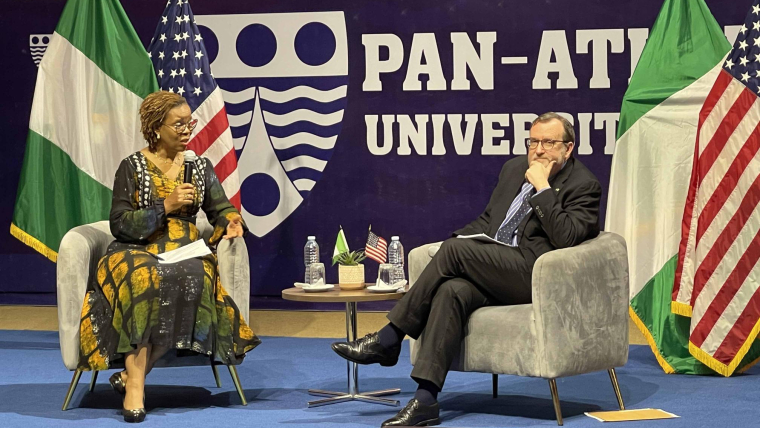
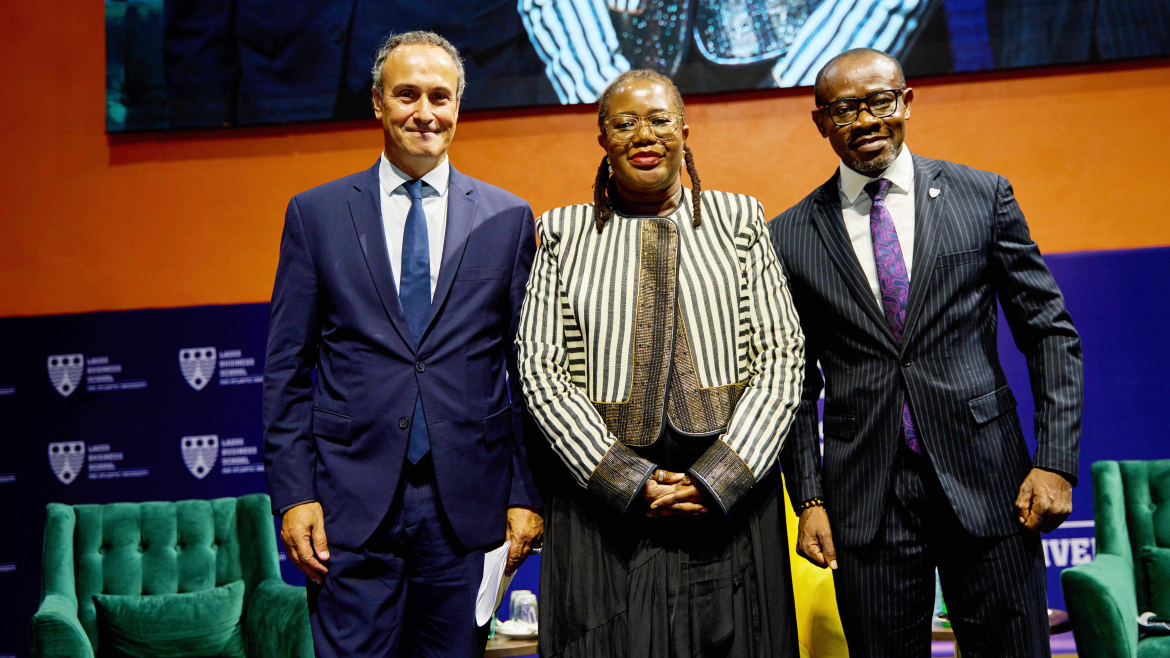
Lagos Business School, Pan-Atlantic University (LBS), on Wednesday, 24 June 2026, hosted the inaugural France-Nigeria Business & Human Capital Development Forum at its Ajah campus, convening diplomats, academics, and public- and private-sector leaders to shape a new blueprint for economic, institutional, and human capital collaboration between both nations.
The forum, themed “Strengthening France–Nigeria Partnerships through Business, Innovation, Human Capital and Executive Education,” reinforced Nigeria’s position as France’s largest trading partner in Sub-Saharan Africa, with over 100 French companies contributing to the local economy.
Deepening Strategic and Institutional Ties
In her opening remarks, Professor Olayinka David-West, Dean of Lagos Business School, highlighted the potential of aligning global innovation capabilities with Africa’s largest and most dynamic market. She stressed that in a rapidly evolving economic and technological landscape, partnerships must extend beyond trade to focus on building sustainable human capital and innovation ecosystems.
“This gathering is more than a forum. It reflects an enduring relationship and a shared commitment to strengthening connections across our institutions, businesses, and people. It is also an opportunity to define how both countries can work together to unlock growth, drive innovation, develop talent, and deliver sustainable impact.”
Delivering keynote remarks, His Excellency Marc Fonbaustier, Ambassador of France to Nigeria, emphasised a broader vision of partnership anchored on ecosystem development and institutional strengthening.
“When these strengths come together, they create opportunities greater than the sum of their parts. Our partnership is about building ecosystems, strengthening institutions, and empowering people. The future of France–Nigeria relations will be shaped not only in diplomatic meetings, but in laboratories, classrooms, start-ups, and partnerships such as this.”
A Framework for Future Collaboration
Providing macroeconomic context, Professor Bongo Adi of LBS identified five major forces shaping bilateral engagement: artificial intelligence, digital transformation, energy transition, food security, and demographic change. To address these shifts, he outlined a five-pillar framework:
- Business and Investment: Expanding economic engagement in high-impact sectors
- Technology and Innovation: Leveraging Nigeria’s growing tech ecosystem and AI opportunities
- Human Capital Development: Empowering youth and advancing female leadership
- Research and Academic Exchange: Strengthening knowledge-sharing and mobility through LBS
- Sustainability: Driving collaboration in climate action and green innovation
From Agribusiness to Technology: Key Focus Areas
Discussions highlighted agribusiness as a strategic priority, with a shift toward climate-resilient systems and agritech innovation. Participants explored how French expertise in logistics, sustainable farming, and agro-processing can complement Nigeria’s agricultural potential to strengthen rural economies.
The forum also underscored the critical role of women and young entrepreneurs as drivers of future growth, calling for targeted executive education, mentorship, and leadership development platforms.
Looking Ahead
The forum concluded with a shared commitment to translate dialogue into measurable action. Lagos Business School reaffirmed its role as a strategic knowledge partner and platform for sustained public-private engagement, supporting the development of a robust France–Nigeria collaboration framework.
These efforts aim to deliver tangible outcomes in innovation, education, and economic development over the coming decade.