
By Bongo Adi, Professor of Economics and Host, LBS Breakfast Club
The Weakest Link: How Time, Risk and Legal Uncertainty Price Nigeria Out of Its Own Waters
Introduction: where did the cases go?
In May 2019, a delegation of the Nigerian Maritime Law Association called on the Chief Judge of the Federal High Court. Its spokesman, Mike Igbokwe SAN, now the Association’s President, warned that delays occasioned by administrative and judicial issues had taken admiralty disputes involving Nigerians and Nigerian entities to other jurisdictions. Seven years later, that sentence is still the most concise statement of Nigeria’s maritime paradox.
Consider one number. In 2025, members of the London Maritime Arbitrators Association received 3,469 appointments, which correspond to an estimated 2,015 new references. No Nigerian institution publishes that figure. A country that does not measure where its disputes go cannot credibly claim to be competing for them.
- Two pictures: potential without conversion
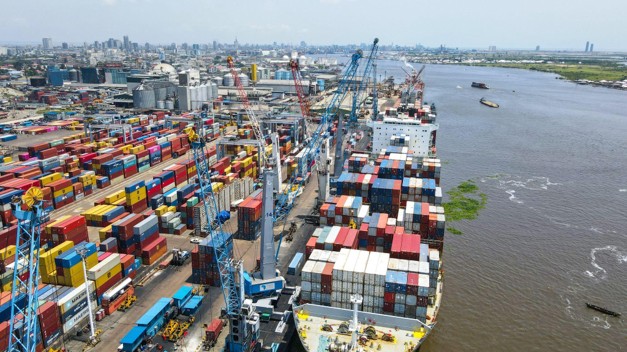
The first picture is one of progress. In the first half of 2026, Nigerian ports handled 68.2 million tonnes of cargo, 12.2 per cent more than a year earlier, and 815,236 TEU of containers, an increase of 10.3 per cent.
The second picture is one of under-conversion. In UNCTAD’s Liner Shipping Connectivity Index for the third quarter of 2026, Nigeria ranks 45th of 181 economies, behind Côte d’Ivoire (38th), Ghana (39th) and Togo (44th), each with a fraction of Nigeria’s cargo base. In the National Bureau of Statistics’ rebased GDP series, water transport accounted for about 0.06 per cent of GDP in 2024, the latest full year available.
More cargo, better operations and new capacity have not produced a proportionate improvement in competitive position. Nigeria does not lack potential. It lacks conversion. Capital, cargo and carriers do not follow potential; they follow risk-adjusted returns.
- The weakest link: an O-ring account
Kremer’s O-ring theory offers a useful frame. Where production requires every step to succeed, output is the product, not the sum, of the quality of each step, and the return to improving a link depends on the quality of the others. A shipper does not buy a port; it buys a chain that runs from cargo base and vessel call through clearance, inland movement and contract performance, and that rests on ship finance and enforceable security. Seven links can be distinguished: the cargo base; port operations; deep-water capacity; liner connectivity; fleet and ship finance; hinterland corridors; and legal and institutional predictability.
In the CPPI 2025, which measures vessel time in port, Lagos (Apapa) ranks 320th, Tin Can Island 318th and Onne 259th, ahead of Lomé (347th), Tema (376th) and Abidjan (381st). Yet Nigeria trails all three on liner connectivity. The binding constraints lie in what happens before and after the vessel is at berth: cargo clearance, contractual certainty, the evidence on which risk is priced, and the enforceability of ship finance. The world prices Nigeria on three variables, time, risk and capital, and each is a legal product before it is an economic one.
- Price one, time: the self-imposed tariff
A robust finding in trade economics is that time is a tariff. Hummels and Schaur estimate that each additional day in transit is equivalent to an ad valorem tariff of 0.6 to 2.1 per cent. In July 2026 the Presidential Enabling Business Environment Council (PEBEC) put cargo clearance at Nigerian ports at 21 days and set a target of seven, to be pursued through joint inspections, scanning and the National Single Window. Cargo dwell at Lomé has been reported at about nine days.
The binding constraint is also contractual. Operators are asked to commit capital over 25-year horizons under six-month legal certainty. The Nigerian Ports Economic Regulatory Agency Act 2026, assented on 19 June 2026, gives the port economic regulator a firm statutory basis after a decade in which Court of Appeal decisions diverged on the Nigerian Shippers’ Council’s interim regulatory role. The economy still awaits a tariff methodology that works.
- Price two, risk: when the premium outlives the danger
Gulf of Guinea piracy has been decisively reduced. The International Maritime Bureau recorded no incidents in Nigerian waters between January and September 2026, against three in the same period of 2025, and two in the whole Gulf of Guinea, against fifteen. Yet Nigeria remains on the Joint War Committee’s Listed Areas (JWLA-035, 16 September 2026, effective 30 September 2026), and war-risk premiums still apply. The London market has not followed the IMB’s 2022 removal of Nigeria from its piracy-prone list or the IBF’s removal of Nigeria from its risk list in February 2023.
The persistence of the premium is a problem of asymmetric information. Markets price evidence, not events. Underwriters respond to verifiable incident data, prosecutions, convictions and asset recovery, which are outputs of the legal system. The Suppression of Piracy and Other Maritime Offences Act 2019 supplies the legal basis. What is missing is a published, credible record of its enforcement. Delisting is an evidentiary project as much as a security one.
- Price three, capital: money will not sail without enforceable law
The Cabotage Vessel Financing Fund, established under the Coastal and Inland Shipping (Cabotage) Act 2003, accumulated for more than two decades before an application portal opened in January 2026. By the Minister’s account, 92 applications were received, 20 were submitted to the Primary Lending Institutions, and one was reviewed and forwarded for approval. The position as at 12 November 2026 is therefore that disbursement has been approved and the process has commenced, with the first application forwarded for final approval, but there is no confirmed payment to a named beneficiary.
Approval is not a ship. Twenty-three years is not a delay; it is a signal about how the system converts law into outcomes. Pritchett, Woolcock and Andrews call the pattern isomorphic mimicry: the adoption of the form of reform without its function. The statute exists, the agency exists and the fund exists. The ships do not.
Under the scheme, NIMASA provides 50 per cent of the financing, the applicant 15 per cent and the lending bank 35 per cent, and the bank bears the credit risk. Lenders ask four questions. Can a mortgage be registered and ranked cleanly? Can a vessel be arrested and sold within a predictable time? Will a foreign judgment or arbitral award be enforced? Will the rules change during the life of the loan? Lenders, however, price outcomes rather than rules, and Nigeria publishes little systematic data on outcomes. Ship collateral is mobile, so a lender will price a Nigerian ship mortgage at the speed of the slowest court that could touch it.
- The mirror: law is infrastructure
Four observations concern the profession directly. First, drafting is necessary but is rarely the binding constraint. What matters is what an instrument contains: a commencement date, a funding mechanism, a named accountable officer and a reporting duty. An Act that depends on several agencies, ministries and the banking sector, and sets none of them a deadline, will wait.
Second, there is regime uncertainty. Nigeria acceded to the Hamburg Rules in 1988 and domesticated them in 2005, while its major trading partners largely contract on Hague or Hague-Visby terms; it signed the Rotterdam Rules in 2009 but has not ratified them.
Third, there is the legislative queue. The Merchant Shipping (Repeal and Enactment) Bill (HB.1592), which would repeal the Merchant Shipping Act No. 27 of 2007, remains before the National Assembly: the House read it a third time on 8 July 2026, but it has not been passed by the Senate or assented to, so the 2007 Act remains the framework, an Admiralty Jurisdiction Bill remains in committee, and the Association has called on the National Assembly to clear pending maritime bills by May 2027.
Fourth, there are incentives. Uncertainty is costly for the economy but not always unprofitable for its advisers, and the Association’s credibility rests on visibly aligning with the public interest.
Roads, ports and power are infrastructure. So are a ship registry trusted by international lenders, admiralty judgments delivered in weeks, and arbitral awards that are honoured. Law is infrastructure, and it either carries the economy or congests it. The next wave will test this quickly.
- Conclusion: a scorecard, a statistics series and a rule of sequence
This article proposes that by its 18th Annual General Meeting in November 2027, the NMLA publish an annual Lagos Maritime Justice and Competitiveness Scorecard covering five indicators:
(1) median time to determine ship-arrest applications and to reach final admiralty judgment;
(2) the share of Nigerian-connected maritime disputes seated in Lagos, compared with London and elsewhere, compiled anonymously from members’ files;
(3) the time taken and success rate in recognising and enforcing arbitral awards;
(4) the number of terminals operating on short-term concession renewals, and the status of NPERA’s tariff guidelines; and
(5) the ship-finance pipeline: applications, approvals, disbursements and registered mortgages.
The Scorecard needs a foundation: one official national maritime statistics series. Published figures do not always reconcile. Nigeria cannot manage what it does not count.
Finally, a rule of sequence: rank the links by quality and by the number of parties who must cooperate; fund first the weakest link for which someone can be held accountable; and, for links that need many hands, build the coordination before the capital.
Lagos Business School, through the Department of Accounting, Economics and Finance, commits to helping design the method, and the results should be published whatever they show. Nigeria does not lack potential. It lacks conversion. Potential is what we talk about. Price is what the world pays us or charges us.