
By Pankaj Badola [AgMP 22] | Head, Modern Trade & Key Accounts, OmniRetail Africa
For much of the past decade, the dominant assumption in African retail has been that e‑commerce is a distinct, self‑contained sales channel: a digital storefront that can be run in parallel with physical retail, modern trade, and informal markets.
That assumption is now breaking.
African consumers have already moved beyond this siloed view of commerce. Across major markets, digital touchpoints increasingly shape purchase decisions, even when transactions occur offline. Estimates suggest that over 60% of African consumers research products online before buying, often in physical stores or through informal retail networks. In this context, treating e‑commerce as “separate” does not simplify operations; it fragments the customer experience.
The strategic risk is no longer about being late to digital adoption. It is about building the wrong digital model altogether.
The End of Channel Thinking
Traditional retail strategy, imported largely from Western markets, assumes clean distinctions: online versus offline, formal versus informal, marketing versus sales. In practice, African consumers flow seamlessly across these boundaries.
A typical journey might begin on Instagram or WhatsApp, continue with price and quality checks via Google or peer recommendations, and end with a purchase at a nearby kiosk, open market, or store. The digital layer shapes trust, preferences, and intent long before payment occurs.
When retailers isolate e‑commerce teams, systems, and strategies, they fail to reflect this reality. Inventory fragmentation, inconsistent pricing, disconnected promotions, and poor post‑purchase engagement become inevitable. The result is not just operational inefficiency but missed conversion opportunities across the entire value chain.
Retailers that are seeing traction today are not those with the most sophisticated websites, but those designed around the assumption that online‑to‑offline movement is the norm, not the exception.
A Second Assumption Under Pressure: Price and Informality
Running parallel to the “separate channel” myth is another long‑held belief: that price is the dominant driver of consumer choice, and that Africa’s vast informal retail sector is structurally inefficient and destined to be displaced by modern trade and e‑commerce.
This assumption is also weakening.
Consumers across income segments are increasingly signalling willingness to pay more for quality, consistency, safety, and trust – particularly in categories such as food, personal care, pharmaceuticals, and household essentials. In informal markets, reputation often matters as much as price, if not more.
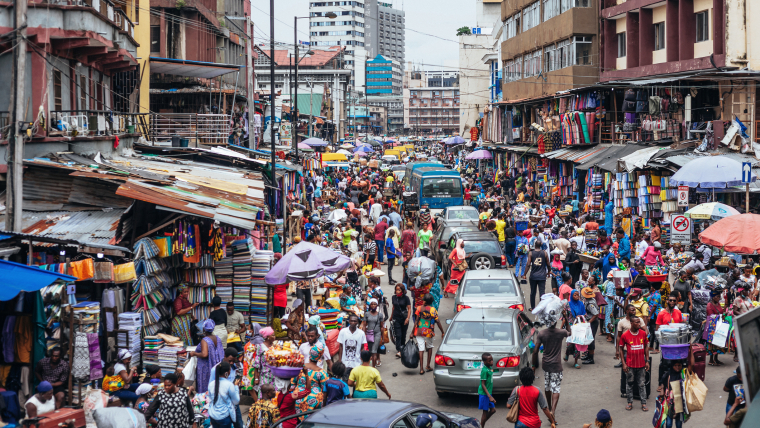
Far from being irrelevant, informal retail remains one of Africa’s most powerful distribution networks. Kiosks, open markets, and agent‑led models offer proximity, convenience, and human trust that formal retail often struggles to replicate at scale. The inefficiency is not inherent; it is often due to poor data, weak logistics integration, and a lack of supplier support.
Retailers that treat modern trade and e‑commerce as substitutes for informality risk excluding themselves from where loyalty is already entrenched.
What Winning Retailers Are Doing Differently
The retailers most likely to succeed in the next phase of Africa’s commerce evolution are shifting from channel optimisation to ecosystem design.
Three strategic moves stand out.
- Designing for the Hybrid Journey
Winning retailers assume that customer journeys will span multiple touchpoints. Strategy starts not with “where does the transaction happen?” but with “where does intent begin, and how do we accompany it?”
This requires integrating digital discovery, mobile engagement, physical fulfilment, and after‑sales service into a coherent experience. It also requires changing incentives internally, rewarding cross‑channel performance rather than siloed metrics.
Hybrid commerce is not omnichannel as a checklist; it is omnichannel as a lived consumer reality.
- Treating Social Platforms as Commerce Infrastructure
In much of Africa, WhatsApp, Instagram, TikTok, and Facebook are no longer marketing tools sitting at the top of the funnel. They are where trust is built, questions are asked, referrals happen, and decisions are made.
Retailers that still treat social platforms as awareness channels underestimate their commercial influence. Increasingly, social interactions shape not only what consumers buy, but where they buy it.
This shift demands investment in social commerce capabilities: conversational selling, influencer-led trust signalling, integrated payments, and real-time fulfilment visibility. The brands that win are those that show up where decisions are actually being made.
- Embracing, Not Bypassing, Informal Retail
Rather than trying to leapfrog informality, forward‑looking retailers are finding ways to plug into it.
This includes building distribution models tailored to kiosks and open markets; providing informal retailers with digital tools for ordering, payments, and inventory; and designing products and pack sizes that reflect local purchasing behaviour.
Informal retail is not a legacy problem to be solved; it is an ecosystem partner to be enabled. Ignoring it means leaving revenue, reach, and relevance on the table.
Technology Must Fit the Context
One of the most common failure points in African retail transformation is technology strategy. Too often, systems are imported wholesale from developed markets and expected to function in environments they were never designed for.
Africa‑appropriate retail technology must be:
- Offline‑first or low‑bandwidth tolerant
- Affordable and modular
- Simple to deploy and use
- Integrated across touchpoints, not layered on top of broken processes
Technology does not create capability on its own. It amplifies what already exists, good or bad. Retailers must fix processes and incentives before automating decisions.
From Channels to Systems
At its core, the shift underway in African retail mirrors a broader pattern across African business: advantage is moving from isolation to integration.
Just as firms are rethinking moats in favour of ecosystems, retailers must move from channel‑based thinking to system‑level design.
The future of African retail will not be won by the cheapest price, the flashiest app, or the largest footprint. It will belong to organisations that understand how value is created across networks of people, platforms, and places, and that build accordingly.
In African commerce, the question is no longer whether to go digital.
It is whether your digital strategy reflects how Africans actually buy.